Be yourself; Everyone else is already taken.
— Oscar Wilde.
This is the first post on my new blog. I’m just getting this new blog going, so stay tuned for more. Subscribe below to get notified when I post new updates.
Be yourself; Everyone else is already taken.
— Oscar Wilde.
This is the first post on my new blog. I’m just getting this new blog going, so stay tuned for more. Subscribe below to get notified when I post new updates.
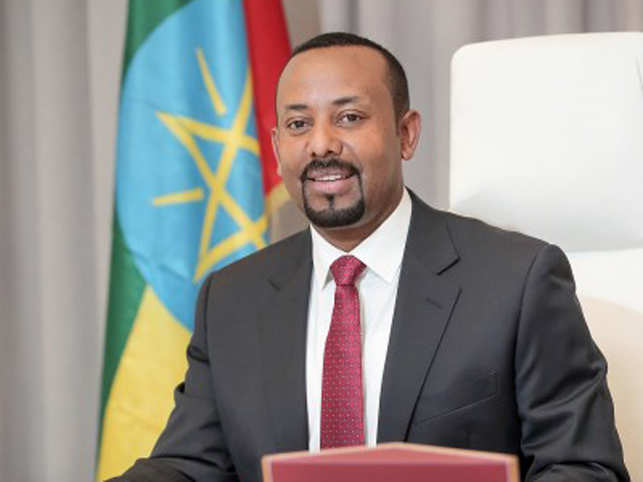
On the 11th of October, Abiy Ahmed became the 100th recipient of the prestigious Nobel Peace Prize. The 43 year old was appointed as the Prime Minister of Ethiopia in April of 2018 and swiftly made efforts to restore peace between Ethiopia and their neighbouring Eritrea. He was the main reason we were able to see the end to a 20 year border conflict between the two African countries.
So what did Abiy Ahmed do and what was the border conflict about? Officially, he was credited with achieving peace and international cooperation. For so long the border conflict was a forgotten one but it saw the loss of almost 100 000 lives and the displacement of more than 650 000 people. What was the conflict about? A small, dusty market town called Badme. Eritrea wanted it, Ethiopia had it and did not want to let it go.
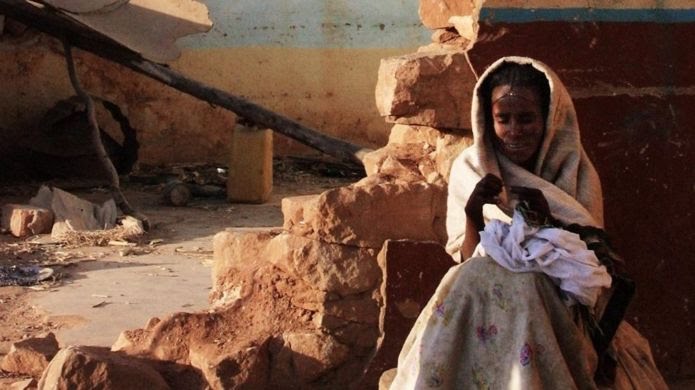
In 1998, war broke out between the two nations and lasted for two years. The border conflict ended up becoming a continuation of the war as Ethiopia took control of Badme. The town seemingly had so little value to both countries that the battle for it was described as “two bald men fighting for a comb”. A year after the war began, Ethiopia claimed that they had won it and held on to Badme. Of course, Eritrea did not agree. Subsequently peace talks were held in which a boundary commission decided Badme was to be given to Eritrea. Ethiopia denied that ruling and that is how the conflict waged on. The border conflict affected other towns between the two countries and many people were displaced. Eritrea felt as though they had to keep increasing the size of their army and many people did not want to join the fight. Many Eritrean’s fled to refugee camps in neighbouring countries or they risked their lives trying to cross into Europe.
Fast forward to 2018, Abiy Ahmed is appointed as Prime Minister of Ethiopia. A beacon of hope to end the senseless violence, and that he did. He ceded Badme to Eritrea 3 months after he came into power and that saw an end to a 20 year stalemate between two former allies.
Between 1870 and 1900 Africa faced many “invasions by western powers in what is called the “scramble for Africa” . This is where western powers wanted to secure as much land in Africa as possible. France, Italy, the Portuguese,Spain and Britain where the western powers involved.
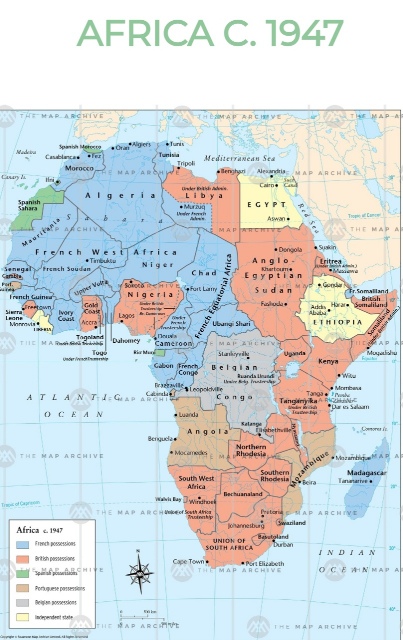
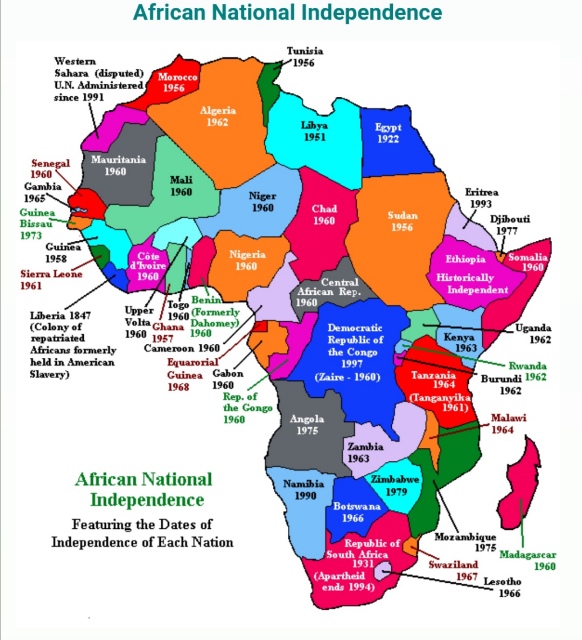
The struggle for independence started after world War I I. The road to independence was very hard and torturous through bloody fights, assassinations, and Revolts. The peak years of independence came in 1960s with 17 countries gaining independence. The first country to gain independence in Africa was arguably Ghana in 1957. Ethiopia and Libya is said to have never been colonized.
African map after independence
List of Africa countries and independence days
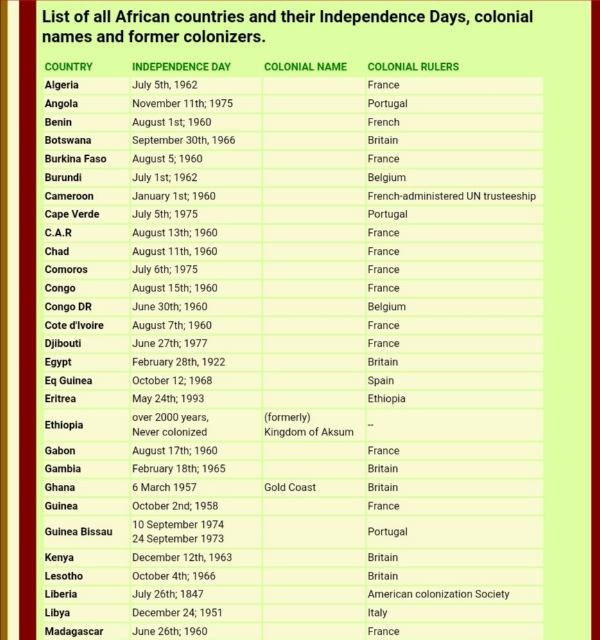
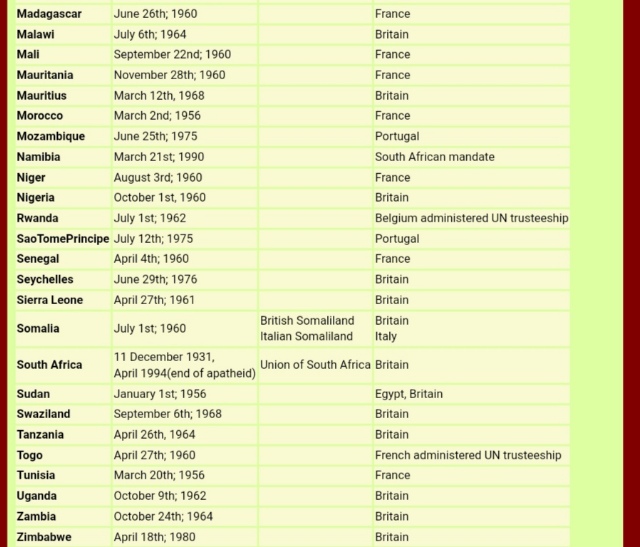
Deecolonisation swept across Africa and countries got their freedom from western powers. Countries began to decide the form of government they wouldwould live under.

If you have ever watched the movie Black Panther, you will know of the story of Wakanda. In the movie, Wakanda is a civilized monarchical society that remains secluded from the rest of the world. In many ways, the Kingdom of Mapungubwe is very similar.
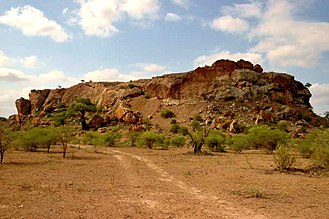
Found in 1075, the Kingdom is believed to be the first monarchy in Southern Africa. That monarchical system set a path for the monarchies that we see today in Southern Africa and every monarchy that we have seen in Southern Africa since then. The hierarchy of Mapungubwe was one of the most civilized and complex hierarchies at the time. The leaders lived on a hill which no one was allowed to visit. By the time the hill was rediscovered in the 1930s, people still believed that it held sacred powers and that even look at it would cause them to go blind or even lose their lives.
The story of how the hill was found is an interesting one. Officially, the rediscovery of this site is credited to ESJ van Graan, but there is more to it. Van Graan visited a man named Mokoena near the site and found him drinking out of a cup made of gold. He began to pester him about where the golden cup came from but he would not budge. Van Graan even tried to bribe Mokoena but it was to no avail. However, the Mokoena’s son heard about it and he took the bribe. He guided Van Graan towards the hill but he too would not look directly at it. It is believed that he simply pointed towards it with his back facing it. He still did not want to disrespect his ancestors.
The people of Mapungubwe were also believed to be extremely civilized for their time. It is said that they traded gold and ivory with the likes of China, India, Persia, etc. The King and Queen of Mapungubwe were buried in massive clay pots on the hills were they lived with hundreds of gold and glass beads and artefacts. Their mere existence did not play into the ideology that black people are primitive and inferior. This was the case so much that after the University of Pretoria excavated the hill in 1932, their findings were kept secret. They did not want the people of South Africa to view black people in any way other than inferior. The findings were only revealed in 1994 after apartheid.
Today the history of Mapungubwe is taught in primary schools in South Africa and it is also recognized as a world heritage site by UNESCO. Rightfully so, as it is a piece of history that every African should know.
This is an example post, originally published as part of Blogging University. Enroll in one of our ten programs, and start your blog right.
You’re going to publish a post today. Don’t worry about how your blog looks. Don’t worry if you haven’t given it a name yet, or you’re feeling overwhelmed. Just click the “New Post” button, and tell us why you’re here.
Why do this?
The post can be short or long, a personal intro to your life or a bloggy mission statement, a manifesto for the future or a simple outline of your the types of things you hope to publish.
To help you get started, here are a few questions:
You’re not locked into any of this; one of the wonderful things about blogs is how they constantly evolve as we learn, grow, and interact with one another — but it’s good to know where and why you started, and articulating your goals may just give you a few other post ideas.
Can’t think how to get started? Just write the first thing that pops into your head. Anne Lamott, author of a book on writing we love, says that you need to give yourself permission to write a “crappy first draft”. Anne makes a great point — just start writing, and worry about editing it later.
When you’re ready to publish, give your post three to five tags that describe your blog’s focus — writing, photography, fiction, parenting, food, cars, movies, sports, whatever. These tags will help others who care about your topics find you in the Reader. Make sure one of the tags is “zerotohero,” so other new bloggers can find you, too.

 Shaping Africa